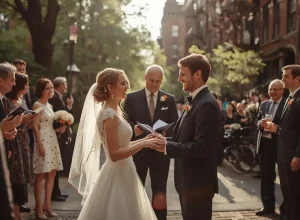
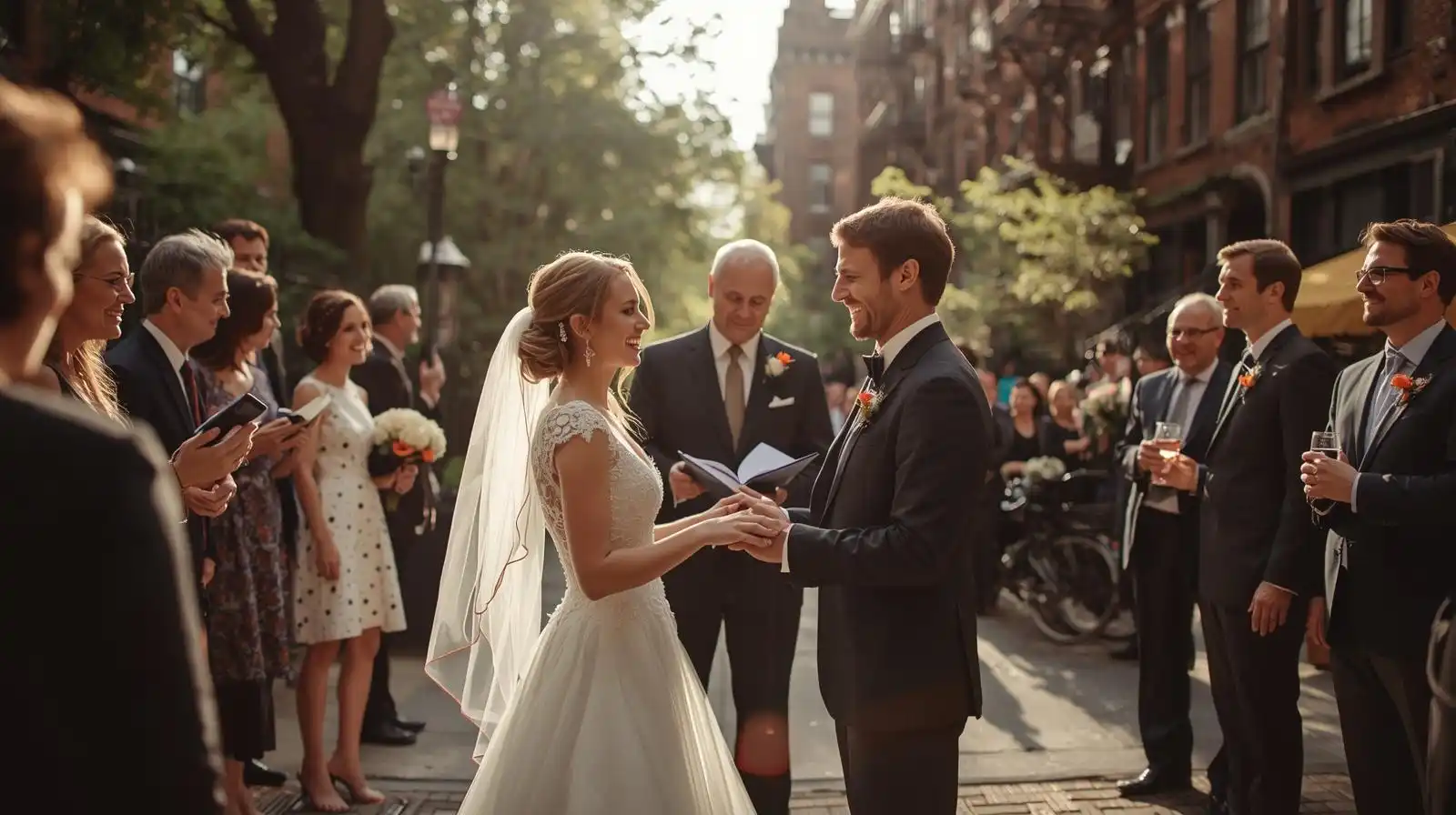
Getting married in New York is fairly simple. Both partners apply together for a marriage license at a city or town clerk’s office, wait at least 24 hours, and then hold a ceremony led by an authorized officiant. The ceremony must happen within 60 days of receiving the license for the marriage to be legally recognized.
Basic Legal Rules for Marriage in New York
New York keeps the rules straightforward. That is one reason many couples like getting married here.
Both people must be at least 18 years old. They also must not already be married to someone else. Close blood relatives are not allowed to marry under state law.
One interesting detail is residency. You do not need to live in New York to marry there. Couples travel from other states all the time. Some even turn it into a small weekend trip with close family.
In simple terms, the state only checks a few key things.
- Both partners must apply together
- A valid photo ID is required
- Previous marriages must be legally ended
- No blood test or medical exam is needed
Honestly, compared with many places, the process feels pretty smooth.
Getting a Marriage License
The marriage license is the first real step. Without it, the ceremony cannot happen.
Couples must visit a city clerk or town clerk office together. In many locations, you can start the application online, but both people still need to appear in person to finish it.
The clerk will ask for basic details. Nothing complicated.
You usually need:
- Government photo ID such as a passport or driver’s license
- Basic personal information
- Divorce papers or death certificate if a previous marriage ended
The license fee in New York City is about $35. Many people are surprised it is that affordable. For a legal document tied to something this important, it feels reasonable.
Most offices issue the license the same day. That part is quick.
The 24 Hour Waiting Period
After receiving the license, couples must wait at least 24 hours before the ceremony can happen.
This rule sometimes surprises people. But in practice, it rarely causes problems. Many couples simply apply one day and schedule the ceremony the next.
Judges can waive the waiting period in rare situations, though most couples just follow the standard rule.
The license stays valid for 60 days. That gives plenty of time to plan a ceremony without rushing.
Planning the Wedding Ceremony
Once the waiting period passes, the ceremony can take place anywhere in New York State.
Some couples go big with a full wedding event. Others keep it very simple. A short ceremony in a park, a courthouse wedding, or a small gathering at home are all common choices.
The ceremony must be performed by someone legally allowed to marry couples. This can include:
- Religious ministers or clergy members
- Judges or magistrates
- Mayors or certain public officials
- Someone who becomes legally ordained online
Many couples ask a close friend to officiate. It makes the ceremony feel more personal. Honestly, those moments often feel more meaningful than a very formal script.
Witness Requirement
At least one witness must attend the ceremony, and the witness must be 18 or older.
After the ceremony, several people sign the marriage license:
- Both spouses
- The officiant
- The witness
It sounds simple, but those signatures are important. They confirm the ceremony actually happened.
A lot of couples pause for a quick photo at this moment. It feels like a small milestone.
Civil Weddings at City Hall
City hall weddings are very popular in New York, especially in New York City.
They are quick, simple, and affordable. Many couples like that style. No long planning. No complicated schedule.
After getting the marriage license and completing the waiting period, couples can schedule a civil ceremony with the city clerk.
The ceremony fee is usually around $25.
You only need a few things:
- Your marriage license
- Valid identification
- At least one witness
The ceremony itself usually lasts just a few minutes. Short, but meaningful. Many couples walk out smiling and a little relieved.
After the Ceremony
Once the ceremony ends, the signed license must be returned to the clerk’s office.
The officiant usually handles this step. The clerk records the marriage and later issues an official marriage certificate.
This certificate becomes the legal proof of marriage. Couples often need it for things like changing a last name, updating documents, or applying for certain benefits.
Many newly married couples keep a copy safely stored. It becomes one of those documents you may not use often, but when you need it, it matters.
Practical Tips Before Getting Married
A little preparation makes the process easier.
Apply for the marriage license a few days before the ceremony. That avoids stress with the waiting period. Also check the office hours of the clerk location ahead of time.
Bring the right identification. That small step saves time.
And one simple tip many couples mention later. Choose a witness who will actually show up on time. It sounds obvious, but it matters.
New York’s marriage process works well because it is clear and flexible. That balance makes it a popular place for courthouse weddings, destination ceremonies, and small private celebrations.

Honey Sharma is a digital marketing professional with 12 years of industry experience and 8 years of expertise in content writing. Having worked across various niches, Honey creates SEO-led, user-focused content that turns ideas into strategies driving visibility, engagement, and business growth.