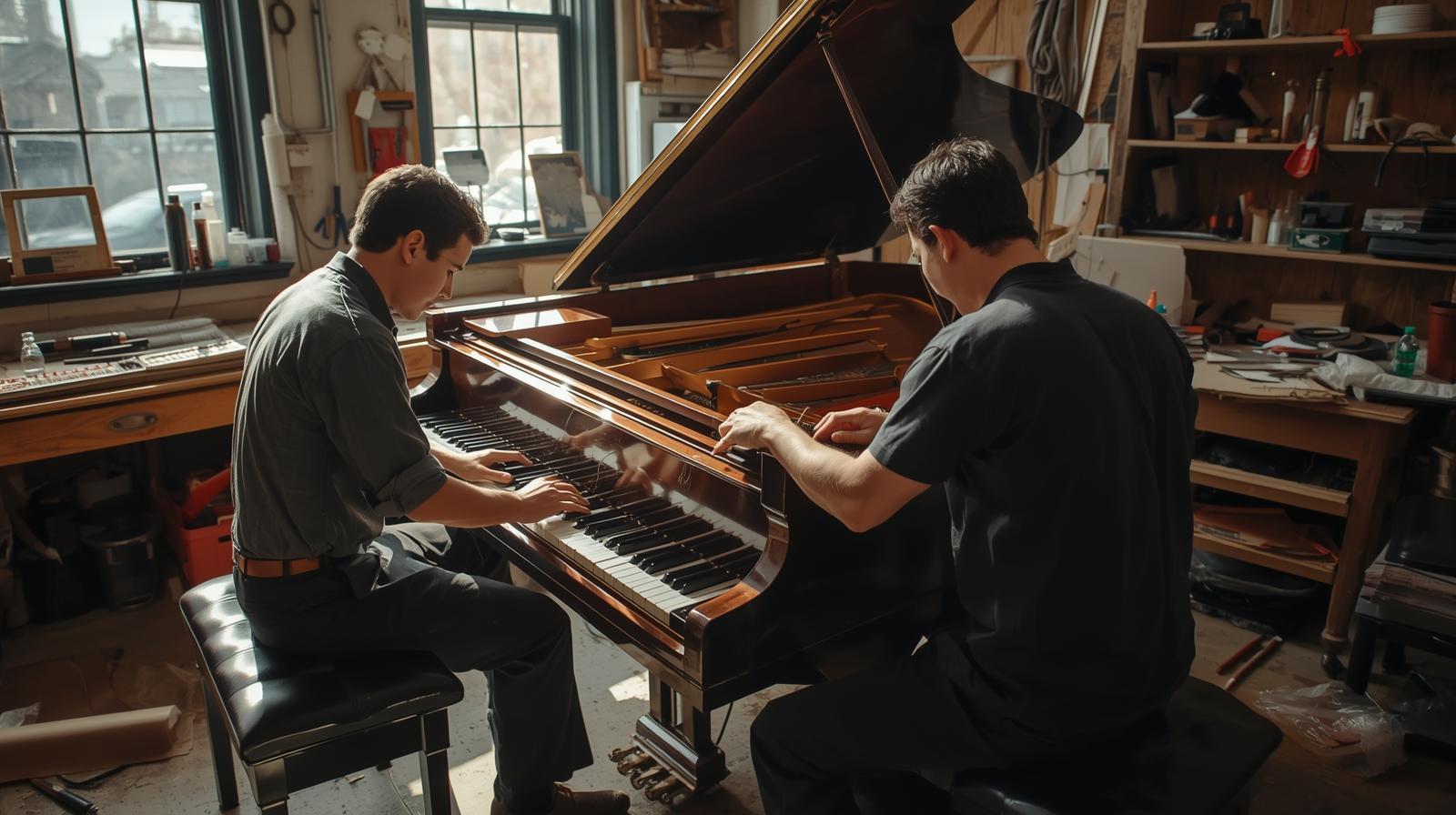
Around 300 to 350 piano tuners are estimated to work in New York City. The exact number is hard to pin down because many technicians work independently or part-time. Business directories show roughly 60+ piano tuning services in NYC, but the total number of individual professionals is higher since freelancers and small one-person businesses are common in this field.
Piano Tuners in New York City
New York City has one of the busiest music environments in the world. Think about it. Broadway shows, jazz clubs, rehearsal studios, music schools, churches, and thousands of homes all use pianos.
All those instruments need care.
Because of that demand, experts estimate roughly 300–350 piano tuners actively service instruments across the five boroughs. These technicians move from place to place every day, adjusting strings and making sure each note sounds right.
In my opinion, it is one of those professions people rarely notice. Yet when a piano sounds perfect in a concert hall, a tuner is usually the quiet reason behind it.
Why the Exact Number Is Difficult to Count
Unlike some jobs, piano tuning does not always happen inside large companies. The industry is mostly built around independent professionals.
That creates a small challenge when trying to count them.
Many technicians work solo
A large number of tuners run small one-person businesses. They schedule appointments directly with clients and travel across the city with their tools.
Because of this, many professionals never appear in big online business directories.
Some tuners work part time
Not every technician tunes pianos full time. For example:
- Piano teachers who also tune instruments
- Repair specialists who occasionally tune pianos
- Retired technicians who still accept a few jobs each month
This mix of full-time and part-time workers makes the total number flexible rather than fixed.
The industry overlaps with repair work
Some professionals describe themselves as piano technicians rather than piano tuners. They might focus on repairs, restoration, or adjustments but still perform tuning during regular service visits.
So depending on how someone counts the profession, the number may look slightly different.
How Experts Estimate the Number of Tuners
Since an exact count is difficult, industry experts often estimate the workforce using a simple demand calculation.
It starts with the number of pianos.
Number of pianos in the city
Estimates suggest New York City has around 170,000 to 180,000 pianos in homes, schools, churches, performance venues, and studios.
That might sound surprising at first. But when you think about the size of the city, it makes sense.
Walk into a music school in Manhattan. Or a church in Brooklyn. Or a rehearsal studio in Queens. Pianos are everywhere.
Average tuning needs
Most pianos require tuning once or twice each year. Climate changes, humidity, and regular playing slowly shift the tension of the strings.
Even a slight change can make the instrument sound off.
Personally, I think this is something many piano owners forget. The piano still plays, but the sound slowly drifts away from perfect pitch.
Annual tuning workload
If we assume the average piano gets tuned about 1.5 times per year, the city would need roughly 260,000 piano tunings annually.
Now consider the workload of a professional technician.
A typical tuner services:
- 3 to 4 pianos per day
- Around 800 to 900 tunings per year
When you divide the city’s annual demand by that capacity, the result points to around 300 to 350 working piano tuners needed to handle the workload.
It is a simple calculation, but it gives a practical picture of the industry.
Where Piano Tuners Spend Their Time
Most people imagine piano tuners working inside music stores. In reality, their day usually involves travel.
A technician may visit several locations in one day.
Private homes
Many families in New York own upright or baby grand pianos. Tuners regularly visit apartments and houses to maintain them.
Picture a technician climbing several flights of stairs in a Manhattan building carrying tuning tools. It happens more often than you might think.
Schools and music programs
Schools depend heavily on well-maintained pianos. Practice rooms, classrooms, and performance spaces all need instruments that sound accurate.
Regular tuning keeps these pianos usable for students.
Performance venues
Concert halls and theaters require precise tuning before events. A Broadway performance, for example, cannot risk an out-of-tune instrument during a live show.
Recording studios
Studios demand perfection. Even a small pitch difference can stand out in a recording.
That is why technicians often tune pianos right before a recording session begins.
Skills Behind the Craft
Piano tuning is not just mechanical work. It requires a trained ear and a lot of patience.
Technicians use tools like tuning hammers and rubber mutes to adjust each string. But the real skill comes from listening carefully to pitch relationships between notes.
Training usually happens through apprenticeships or specialized courses.
It takes time. Often years.
And honestly, that level of dedication shows in the results. A well-tuned piano simply feels different when you play it.
The Quiet Professionals Behind the Music
Piano tuners rarely get public attention. Yet they move quietly through the city every day, keeping instruments in working order.
One morning they might tune a piano in a small Brooklyn apartment. Later that afternoon they could be preparing a grand piano for a concert rehearsal in Manhattan.
Different locations. Same goal.
Keeping the music sounding right.
And while the exact number may shift over time, industry estimates consistently suggest several hundred piano tuners help maintain New York City’s massive collection of pianos each year.

Mohd Anas is a research-driven writer with hands-on experience in creating insightful local content. With a strong background in engagement operations and digital content strategy, he delivers clear, accurate, and reader-friendly information. His writing helps audiences discover local insights, practical solutions, and well-researched answers to everyday queries.